Made in Africa
Coffee Cherry to Cup
Coffee comes from Africa. Its wild home is the Kaffa forests of Ethiopia, where it is called buna. Today Ethiopia, Uganda, Kenya, Rwanda and Tanzania grow some of the world's finest coffee. Walk the line from red cherry to a cup you brew yourself.
- → 1. Picking ripe cherries
- 🔒 2. Pulping and fermenting
- 🔒 3. Drying on raised beds
- 🔒 4. Roasting
- 🔒 5. Grinding and brewing
Welcome to the coffee factory
- ⌨️ W A S D or arrow keys to walk, Shift to go faster (or the arrow buttons).
- 🖱️ Drag to look around.
- 🚶 Walk up to each machine in order. Follow the glowing arrow, then click the machine or press Start.
- 📋 Follow the work orders and download your lab report.
- ☕ At the end, design your coffee bag and see where the money goes.
From cherry to cup, for real
Real photos in the order the factory works. Captions say where photos come from outside Africa.
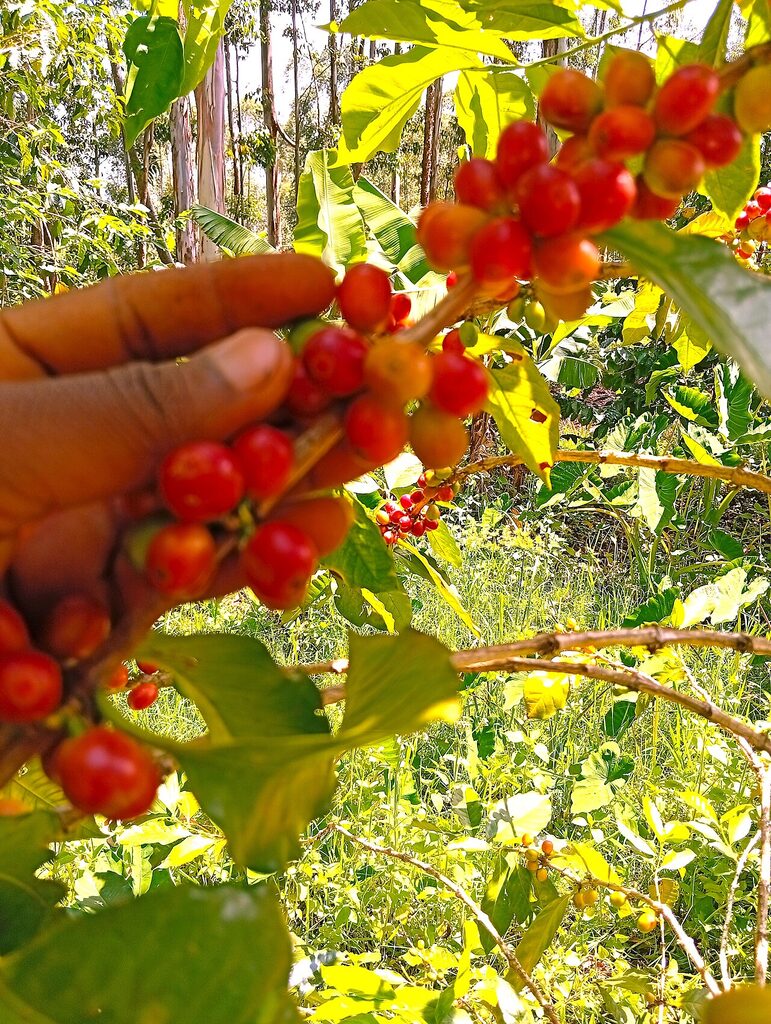 1. Picking ripe coffee cherries in Kuria, Kenya.
Photo: Elite Jac · CC BY-SA 4.0 · source
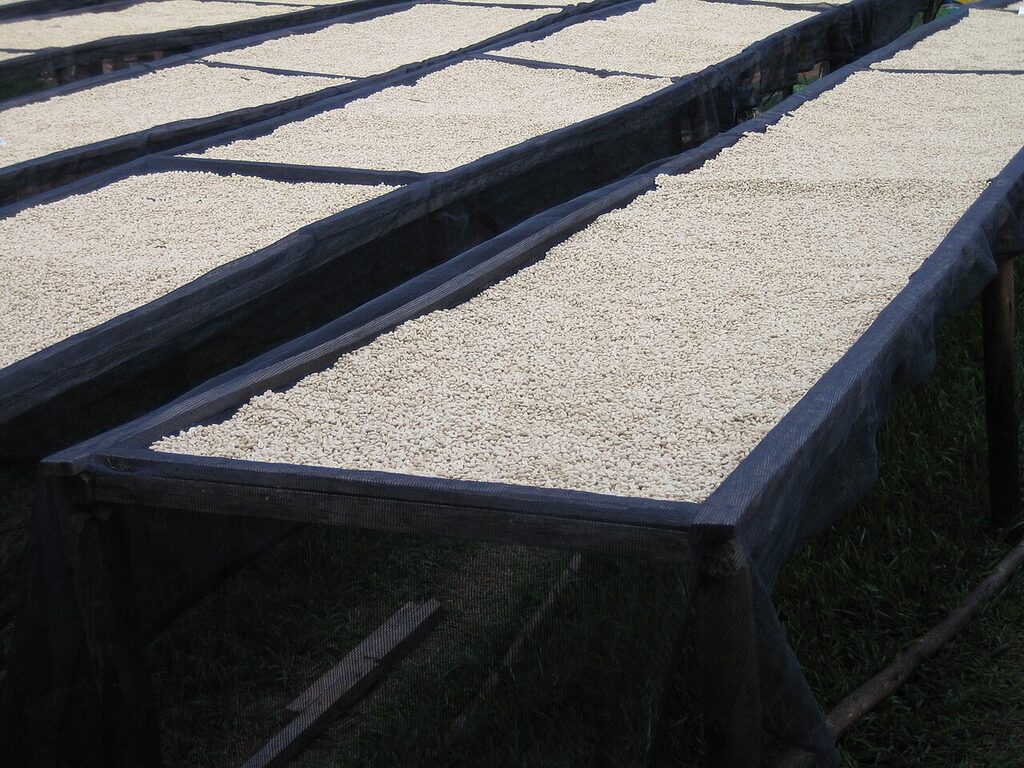 2. Raised coffee drying beds at Maraba, Rwanda.
Photo: SteveRwanda · CC BY-SA 3.0 · source
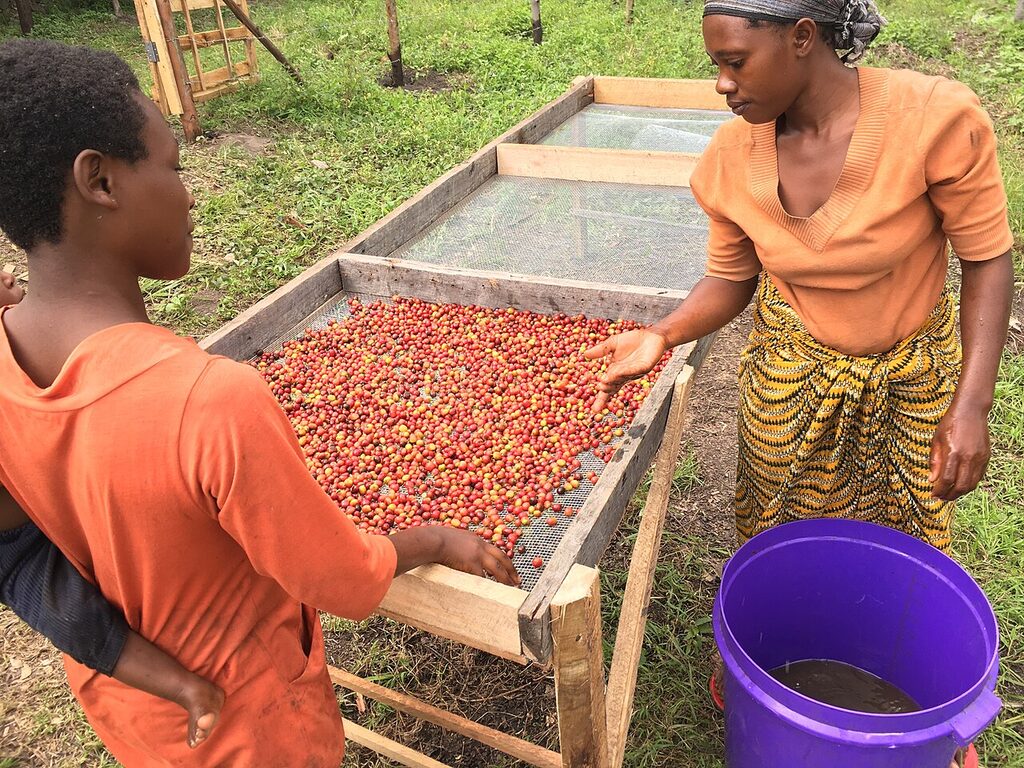 3. Women drying coffee in Uganda.
Photo: Philip Asedri Dradrio · CC BY-SA 4.0 · source
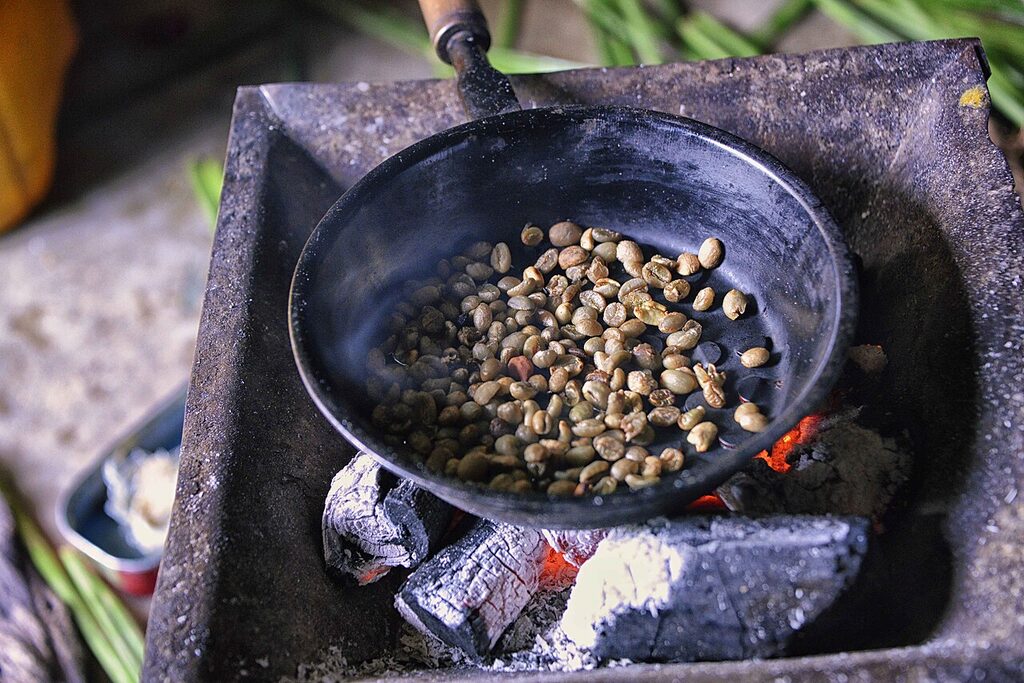 4. Roasting coffee beans in a pan, Ethiopia.
Photo: Rod Waddington · CC BY-SA 2.0 · source
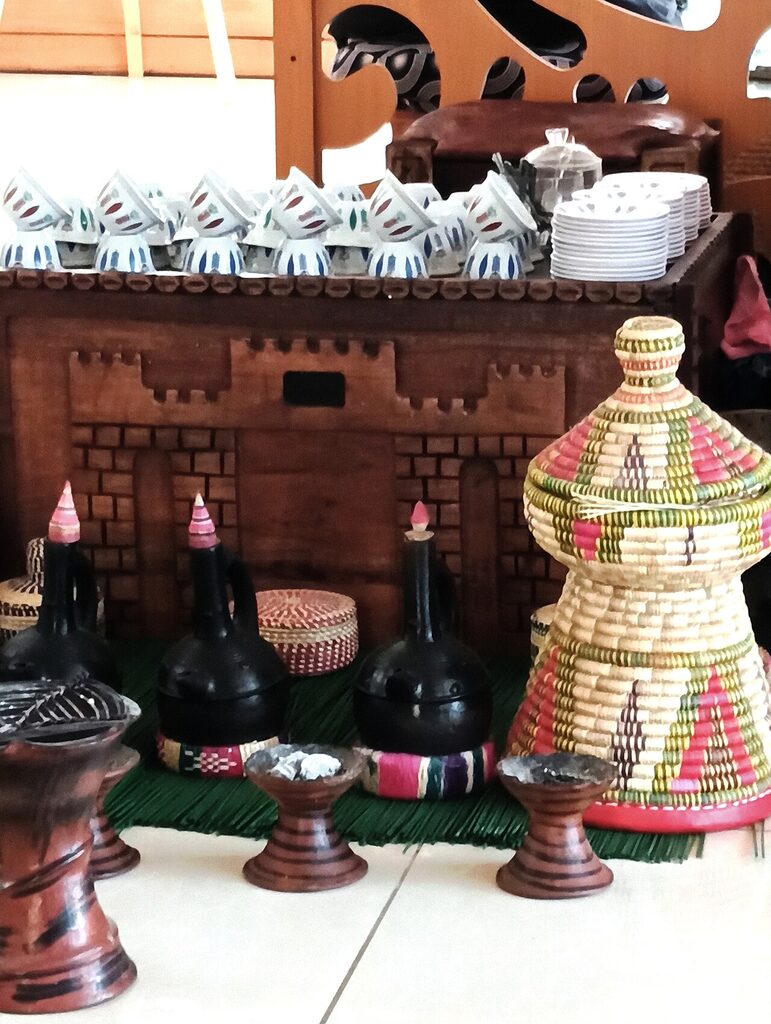 5. A jebena and small cups for the Ethiopian coffee ceremony.
Photo: Miraethiopia · CC BY-SA 4.0 · source
Copy prompt for Lovable
Paste this into the Pan African Global Open Curriculum project to add this factory there.
Add a "Made in Africa Factory: Coffee Cherry to Cup" hall to the Pan African Global Open Curriculum, next to the cocoa and solar halls.

1. Reuse the 3D factory hall (three.js, lazy, client only): walk with W A S D / arrows / on-screen buttons, drag to look, full screen, the shared welcome card, and walk-to-unlock stations in order with a glowing floor arrow.
2. Paint: roasted-brown walls, an Ethiopian red band with wave pattern, warm light; page buttons and titles in coffee red.
3. Same five Black technicians in new outfits and a new order: Hiwot (picking), Dawit (washing station), Meron (drying beds), Tesfaye (roaster, goggles), Selam (buna ceremony).
4. Five hands-on games with stars, results after play, real credited Wikimedia Commons photos and a "Think about it" question:
   - Pick + float test: tap deep red cherries on a drawn branch (green/yellow/overripe cost points), then drag a strainer to skim floaters (overripe and hollow cherries) off a bucket of water without scooping good sinkers.
   - Pulp + ferment: drag a crank handle round to turn a disc pulper (too fast nicks beans); the tank's temperature sets when it is ready (about 36 h at 16 °C down to 22 h at 26 °C); hold to pass hours, use a rub test (slippery / gritty = ready / sour), then wash.
   - Dry: a raised bed of bean patches dries in the sun (slower as it gets drier); drag to rake, pull a cover when rain clouds come, tap patches with a moisture meter; unraked wet patches go mouldy after 30 h; bag at 10–12 % and even.
   - Roast: a cutaway drum over a flame knob, live temperature curve, first crack pops at 196 °C; drop at 200–225 °C after 1.5–3.5 min of development, stir the cooling tray below 50 °C within 4 min, then match the roast colour card.
   - Brew: choose grams and ml; best about 1:16 (1:14–1:18).
5. Finale: design and download a coffee bag label, then "Where the money goes" (cherries ~$3 → green coffee ~$6 → roasted bags ~$25 → café cups ~$300).
6. Work orders, lab report download, "Did you know?" cards. Mark science and prices for teacher review. Saving work is phase 2 (paid accounts).